
Free Farmstand Quick-Start Guide
With Bonus Cottage Food Laws Worksheet!
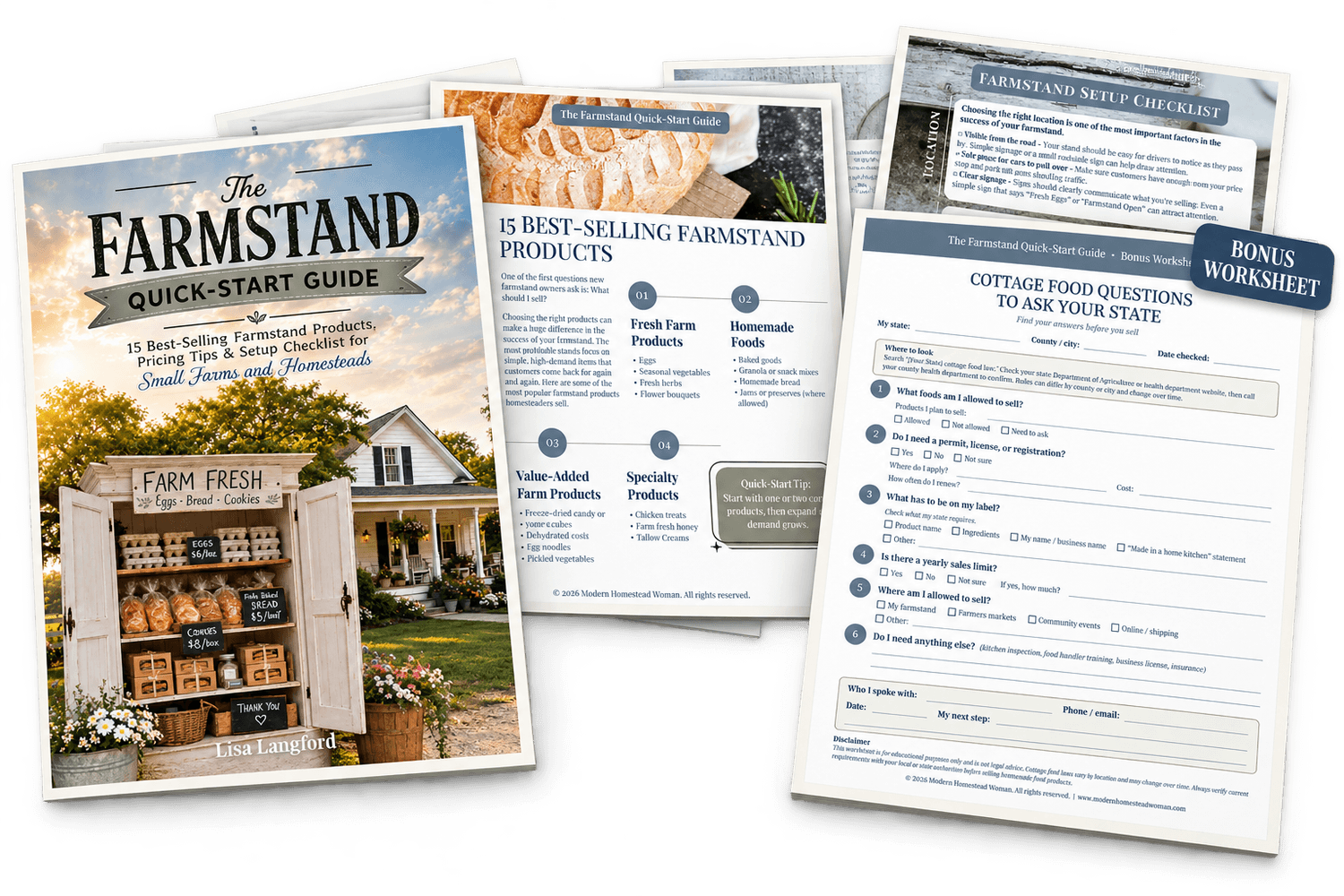
15 best-selling products, pricing tips, and a setup checklist to help you turn what you already grow, raise, or bake into farmstand income.
Free instant download. No spam, unsubscribe anytime.
What's Inside
✅ 15 best-selling farmstand products, from eggs and bread to honey and freeze-dried treats
✅ A pricing cheat sheet, including the "3x ingredient cost" starting point
✅ A printable setup checklist: location, display, payments, and signs
✅ A plain-English intro to cottage food laws, plus where to look up your state's rules
✅ Bonus: Cottage Food Questions to Ask Your State worksheet
Picture This
Picture a customer pulling into your driveway for fresh eggs and leaving with homemade bread and a jar of jam too. Little by little, your hobby starts helping cover groceries, feed, or your next family trip. It doesn't take the biggest farm, just a simple plan and a first step.
Why I Created This Guide

Hi, I'm Lisa Langford, a homesteader and the author of The Farmstand Blueprint, Raising Chickens for Beginners, Food Preservation Made Easy, Making Money with Backyard Chickens and The Rotating Pantry System. I made this guide because most people already have what they need to start. They just need a clear first step.
Take the first step toward your farmstand.
Frequently Asked Questions About Starting a Farmstand
Absolutely. Many homesteaders earn steady side income selling fresh eggs, produce, flowers, baked goods, jams, and other homemade products directly to their local communities.
Not at all. Some of the most successful farmstands begin with just a handful of products and grow over time.
Products that are fresh, local, seasonal, and difficult to find in grocery stores often perform well. The guide shares some of the most popular options to help you get started.
Requirements vary by state and county. The guide explains the basics and helps you understand what you'll need to research where you live.
Discover proven strategies and tactics that will help you increase your online profits
From optimizing your website to leveraging social media and email marketing, we'll show you how to generate more traffic, leads, and sales.
Don't miss out on this opportunity to skyrocket your digital revenue - subscribe now and get your FREE copy today!
We HATE spam. Your email address is 100% secure